


Why Your Smoker Won’t Hold Temperature on Charcoal
Most charcoal cooks blame the fuel first. It is an easy conclusion to reach when a smoker races past target, stalls halfway through a pork shoulder, or drops 20 degrees after looking steady for an hour. In practice, temperature control on charcoal is rarely a story about one bad bag of fuel. It is usually a story about airflow, fire size, ash build-up and how the cook responds when the gauge starts moving.
That matters because a stable charcoal fire is less about constant correction than good setup and patience. Backyard cooks who get reliable low and slow results tend to do the same few things well. They light a modest fire, manage oxygen in small steps, keep the air path clear and resist the urge to treat every dip as a crisis. When a smoker will not hold temperature, the fix is often simpler than it looks.
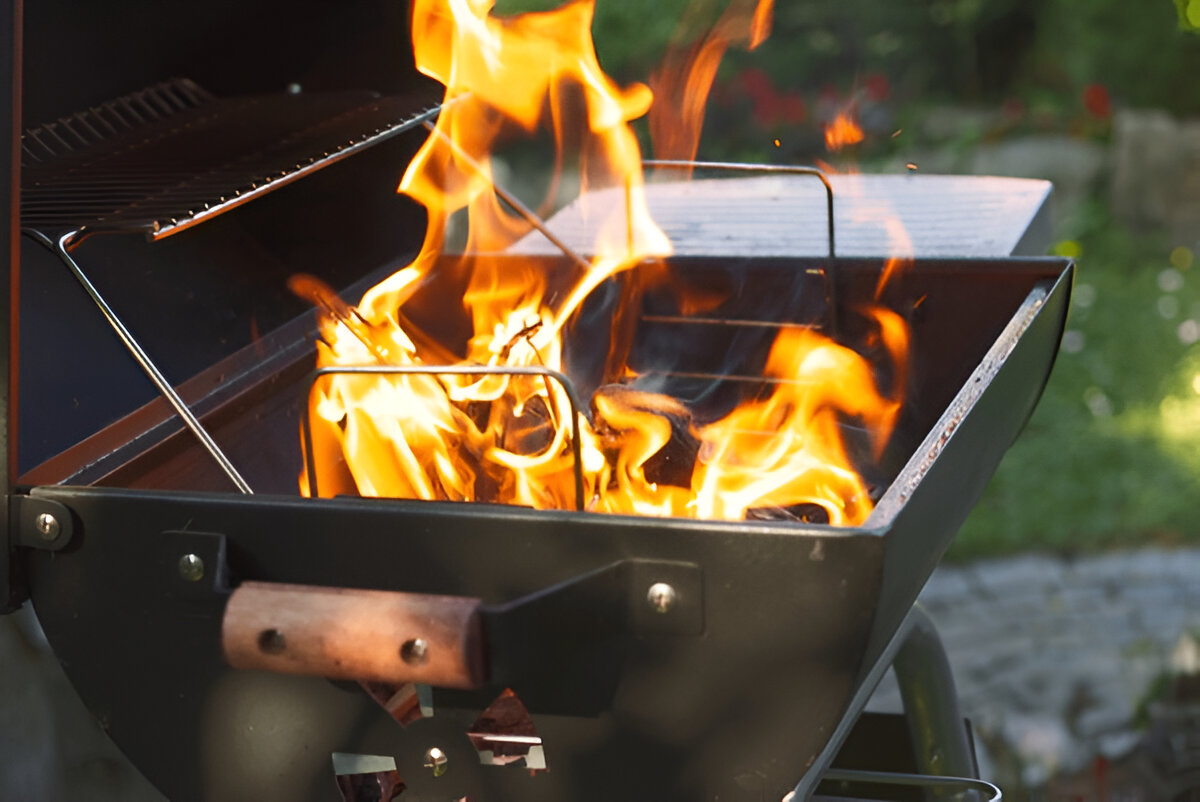
Temperature control is an oxygen story
On a charcoal smoker, heat is the result of fuel meeting oxygen. The fire draws air in through the intake, burns hotter or cooler depending on that supply, and pushes heat and smoke out through the exhaust. That principle applies whether you are cooking on an offset smoker, a gravity-fed charcoal cooker or a drum-style smoker. More air, more heat. Less air, less heat. The details vary by design, but the logic stays the same.
The common mistake is to treat vents like switches. Open, closed, problem solved. In reality, they behave more like trimming tabs. A small change can take several minutes to show up at grate level, especially once the cooker body has absorbed heat. If you move a vent, then move i
Quick diagnosis table
| What you see | What it usually means | What to do first |
|---|---|---|
| Smoker shoots past target early | Too much lit charcoal, or vents left wide open for too long | Light a smaller starter fire and begin closing down before the cooker reaches target |
| Temperature falls after a few steady hours | Ash is blocking airflow, or the fuel bed is packed too tightly | Clear ash safely when needed and make sure the fire grate can breathe |
| Every lid check causes a spike later | Fresh oxygen hits the fire when the lid opens | Open less often and give the cooker time to settle after closing |
| Temperature dips when cold meat goes on | The cooker is absorbing the load of cold food | Wait before adjusting vents. A brief drop is normal |
| Cooker stays too hot even after vents are reduced | The body of the cooker has already heat-soaked | Creep up to target next time instead of overshooting |
Starting with too much lit fuel
A charcoal smoker that starts too aggressively is hard to calm down. That is true on an offset with a small firebox and equally true on a gravity-fed charcoal unit. If you dump in a full chimney of fully lit charcoal for a 120°C cook, you have built a larger fire than the cooker needs before the meat even goes on. Closing vents later may slow the climb, but it will not erase the heat already in the system.
For lower temperature cooks, it is usually better to light a modest portion of the fuel and let the rest catch gradually. That gives you room to approach the target instead of overshooting it. Experienced charcoal cooks often talk about sneaking up on the cooking temperature. It sounds cautious because it is. On charcoal, bringing a cooker up is easy. Bringing it back down takes longer.
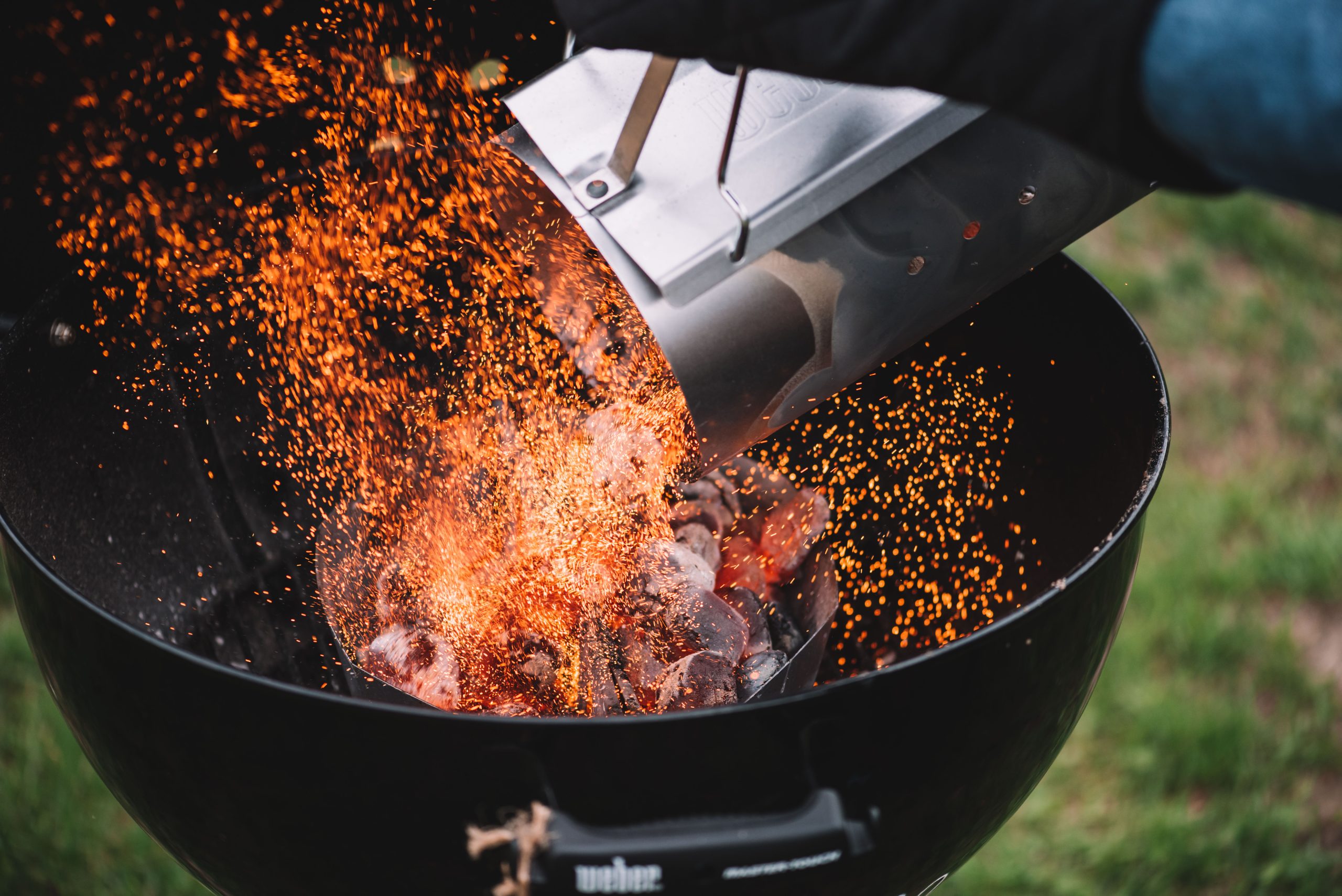
Ash and airflow are linked more than most people realise
When a smoker drifts down for no obvious reason, ash is high on the list of suspects. Fine ash settles around grates, baskets and lower air inlets, restricting the flow of oxygen that keeps coals alive. That matters on offsets, gravity-fed cookers and drum cookers alike. A dirty fire path can make a smoker look under-fuelled when the real problem is that the fire cannot breathe properly.
This shows up most clearly on longer cooks. A smoker may look well behaved for the first two or three hours, then start struggling even though there is still unburnt charcoal in the basket. The cook assumes the fire is running out of fuel when the real problem is that the remaining fuel is being starved. Good charcoal smoker temperature control depends on a clear path for air as much as it depends on fuel quantity.
Lid opening and door opening change the fire
One of the least intuitive parts of charcoal cooking is that checking the food can change the fire more than it changes the food. When the lid opens, heat escapes, but oxygen rushes in. Once the lid closes, that oxygen feeds the coals and can produce a rebound spike. The same thing happens when an offset firebox door or access panel is left open while poking the fire or adding fuel.
This is why a stable cook can look unstable in the hands of an impatient cook. The smoker is not misbehaving on its own. It is responding to repeated interruptions. If you are running probes at grate level and the meat is progressing normally, the smartest move is often to leave the cooker alone.
Weather, cooker design and probe placement matter
Wind strips heat and changes how air moves through a smoker. Cold weather can increase fuel demand. Rain and damp conditions do not ruin a cook on their own, but they do make a marginal fire less forgiving. That means two identical vent settings can behave differently from one day to the next, especially on an exposed patio or in a gusty backyard.
Cooker design matters too. An offset responds differently from a drum cooker or a gravity-fed charcoal smoker. Offsets lose heat faster in wind because the metal body and chamber layout are more exposed. Drum cookers often run efficiently once settled, but their airflow can change quickly if the lid comes off too often. Gravity-fed cookers can look steady for hours, then fade if ash build-up or poor charcoal flow starts to interrupt the burn. Probe placement can muddy the picture as well. A lid thermometer reads one part of the cooker. A digital probe clipped near grate level, away from direct radiant heat, tells you more about the environment the meat is sitting in.
Stop chasing every small temperature movement
Backyard cooks often aim for a single number and then panic when the cooker moves around it. Charcoal does not behave like an indoor oven. It breathes, settles, recovers and sometimes wanders a little. A narrow band is normal. What matters is whether the cook is broadly stable, the smoke is clean and the meat is moving in the right direction.
The more useful question is not, ‘Why am I two degrees off?’ It is, ‘Is the fire healthy?’ A healthy charcoal fire has enough oxygen, a sensible amount of lit fuel, clean airflow and no constant interference from the cook. Once those conditions are in place, many so-called temperature problems disappear.
A steadier routine for low and slow
None of this is glamorous, but that is the point. Reliable charcoal cooking is usually built on repetition rather than heroics. Once you understand how your smoker responds to fuel, oxygen and weather, you stop fighting it and start steering it.
Start with less lit charcoal than you think you need for a low temperature cook.
Bring the smoker up gradually and make your first vent adjustment before it reaches target.
Use one vent as the main control so you are not changing two variables at once.
Wait long enough for each vent change to register before touching anything again.
Keep lower vents, ash catchers and fire grates clear so the fuel bed can breathe.
Use a grate-level probe if possible, and treat the lid gauge as a broad guide rather than the whole story.
Expect a brief dip when cold meat goes on, then let the cooker recover before intervening.